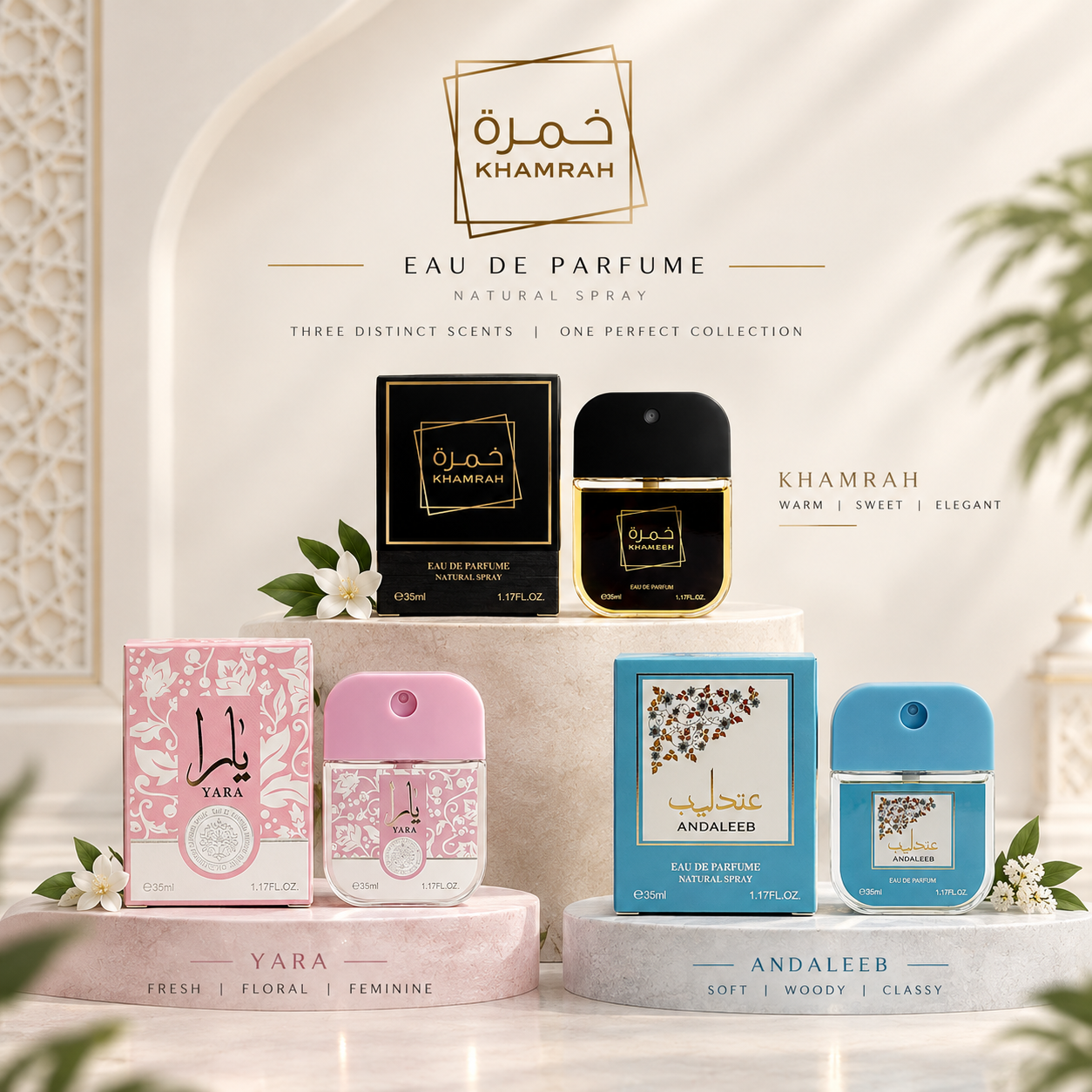
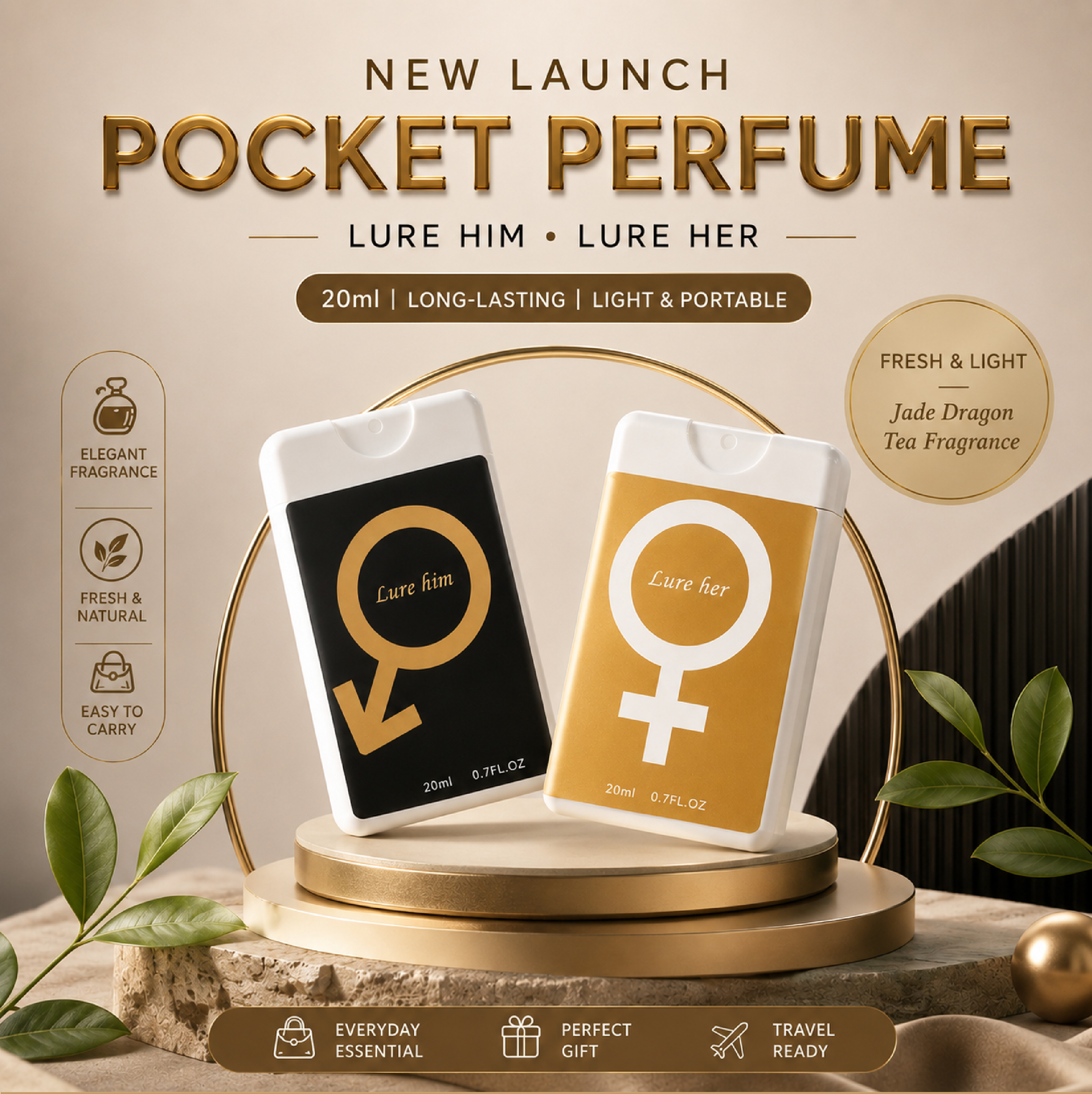
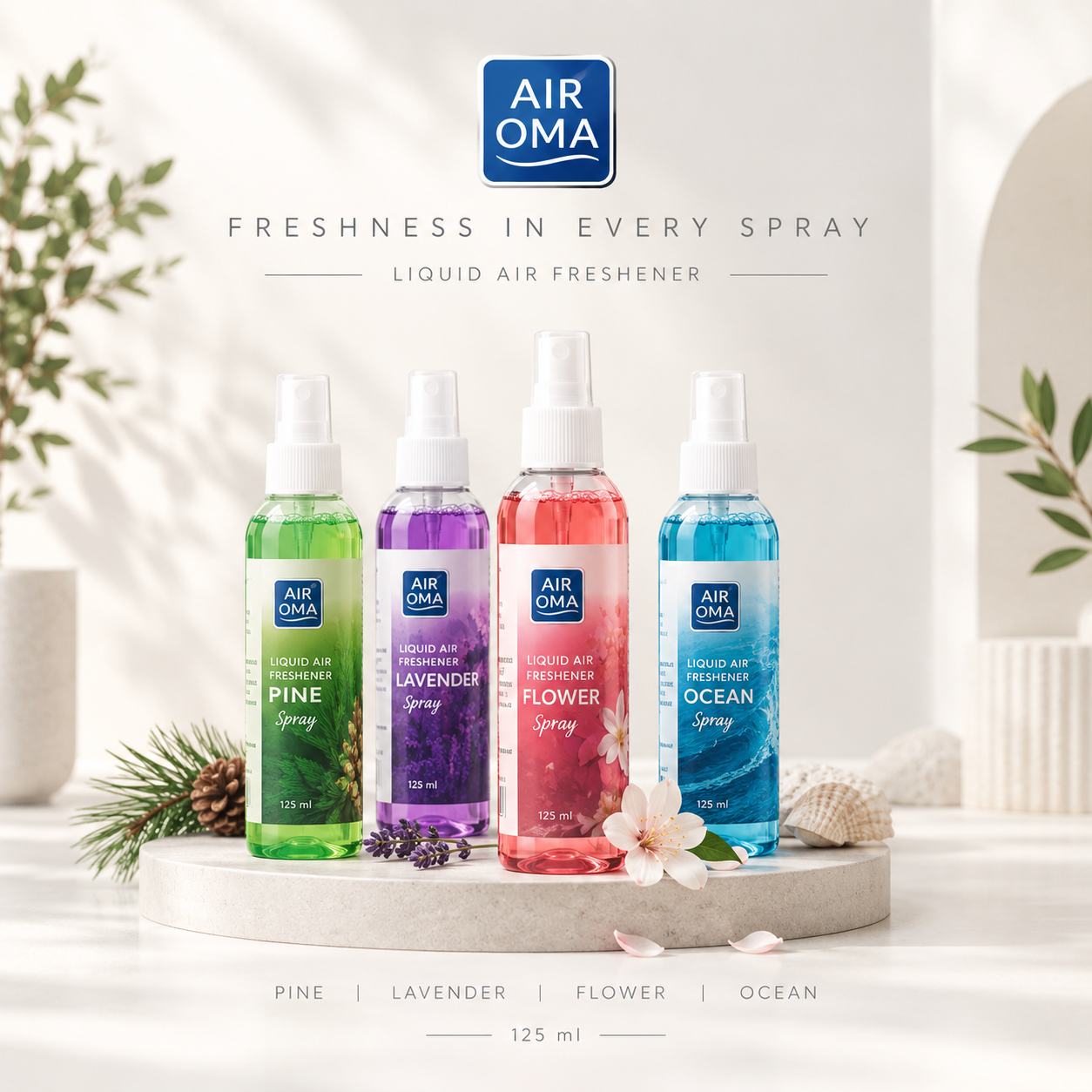
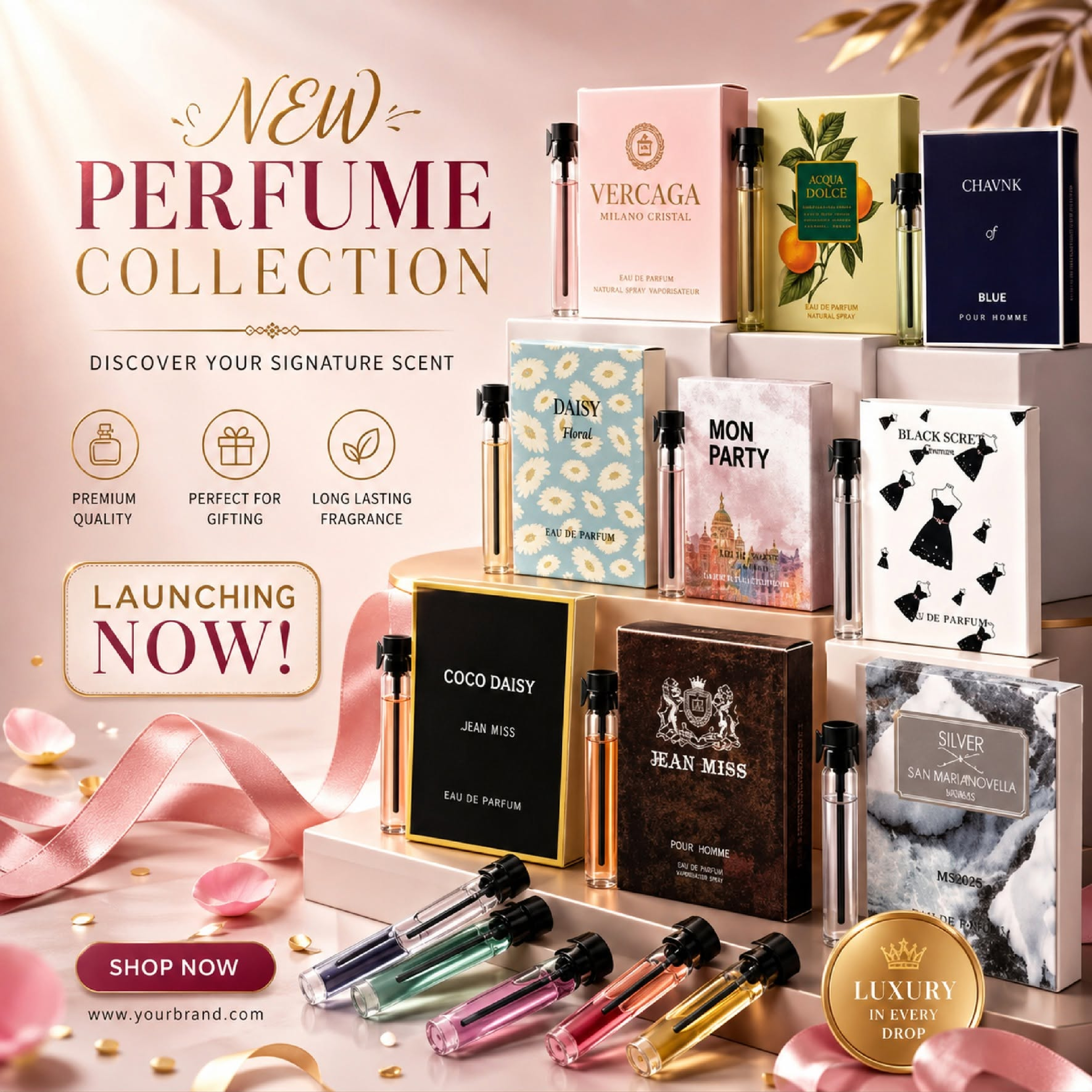
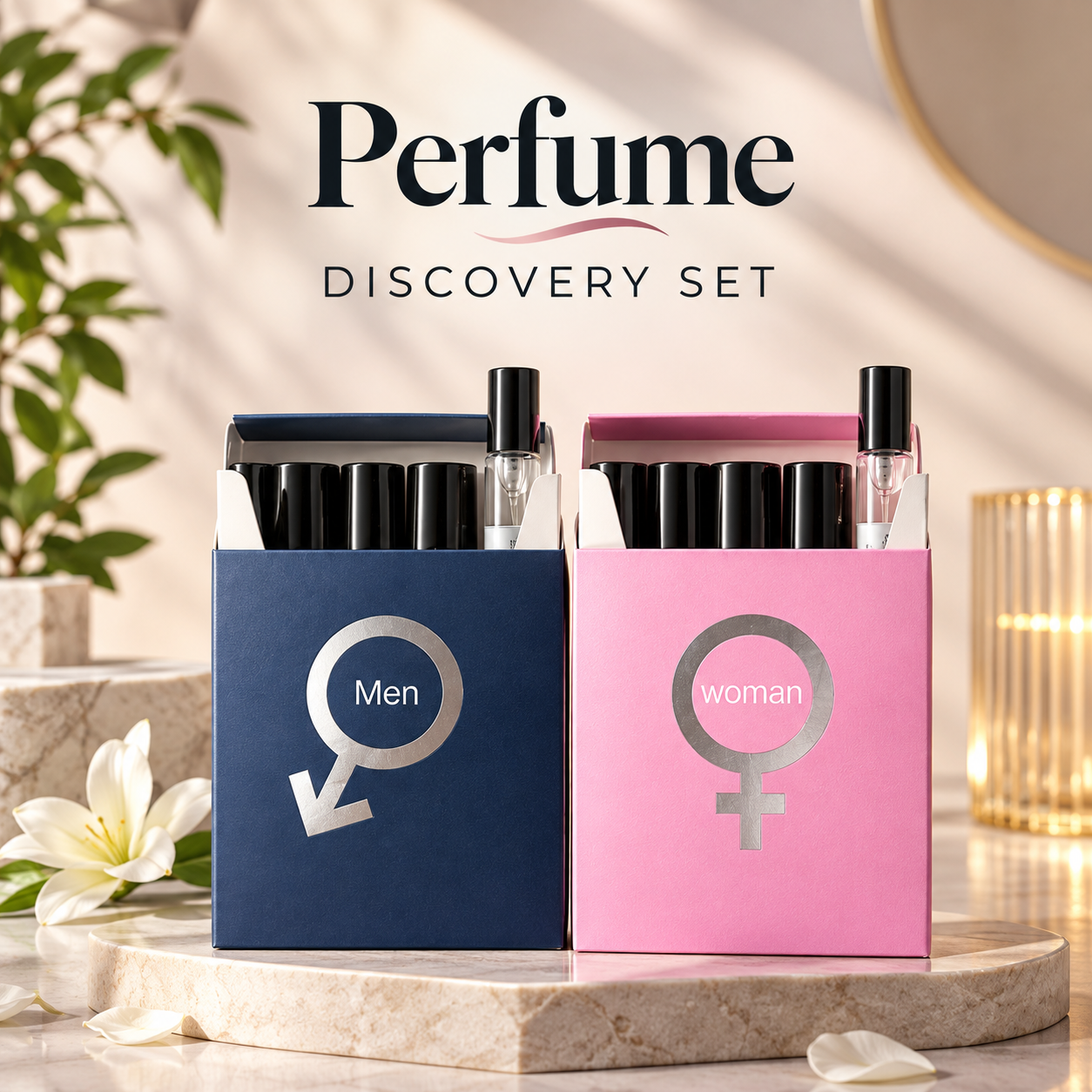
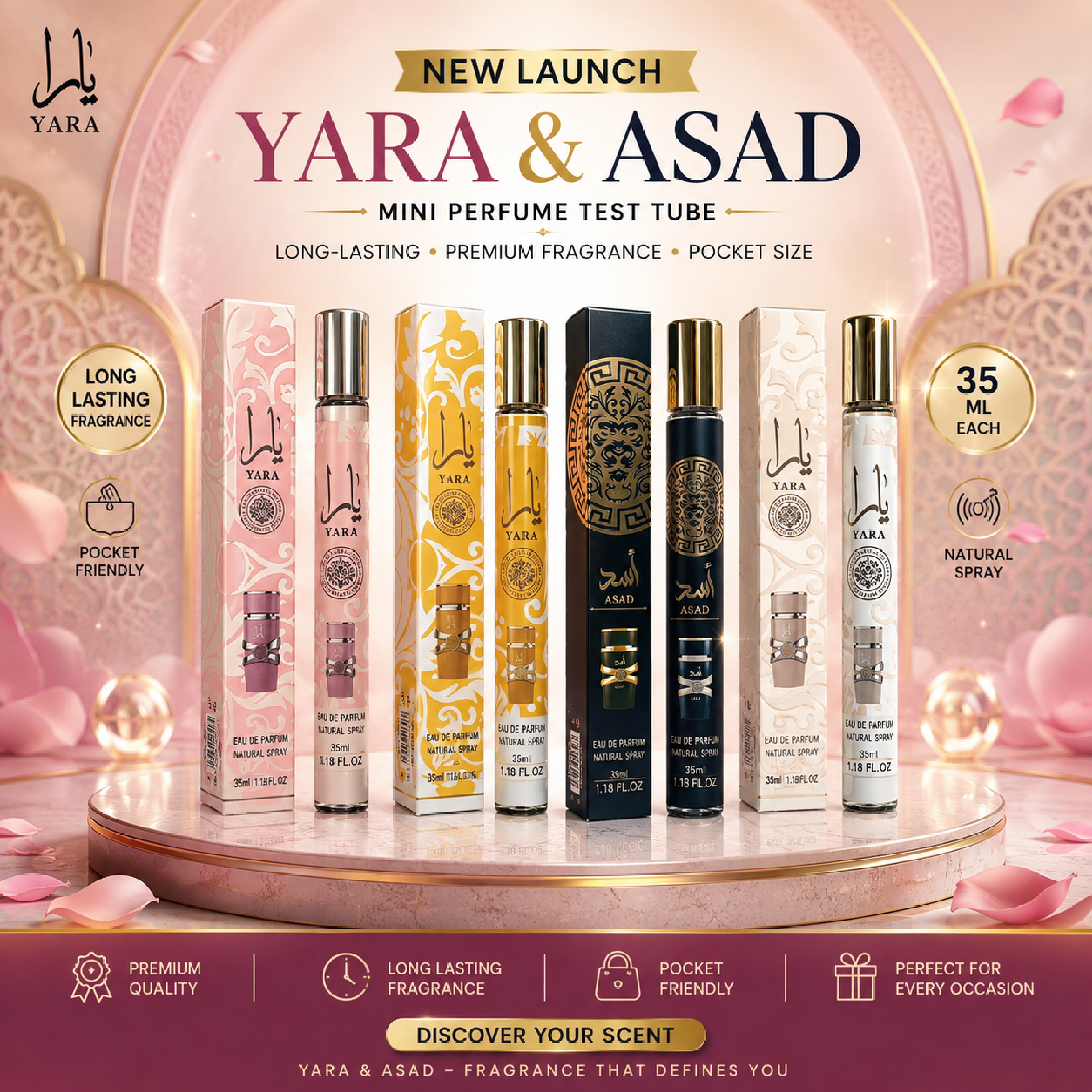
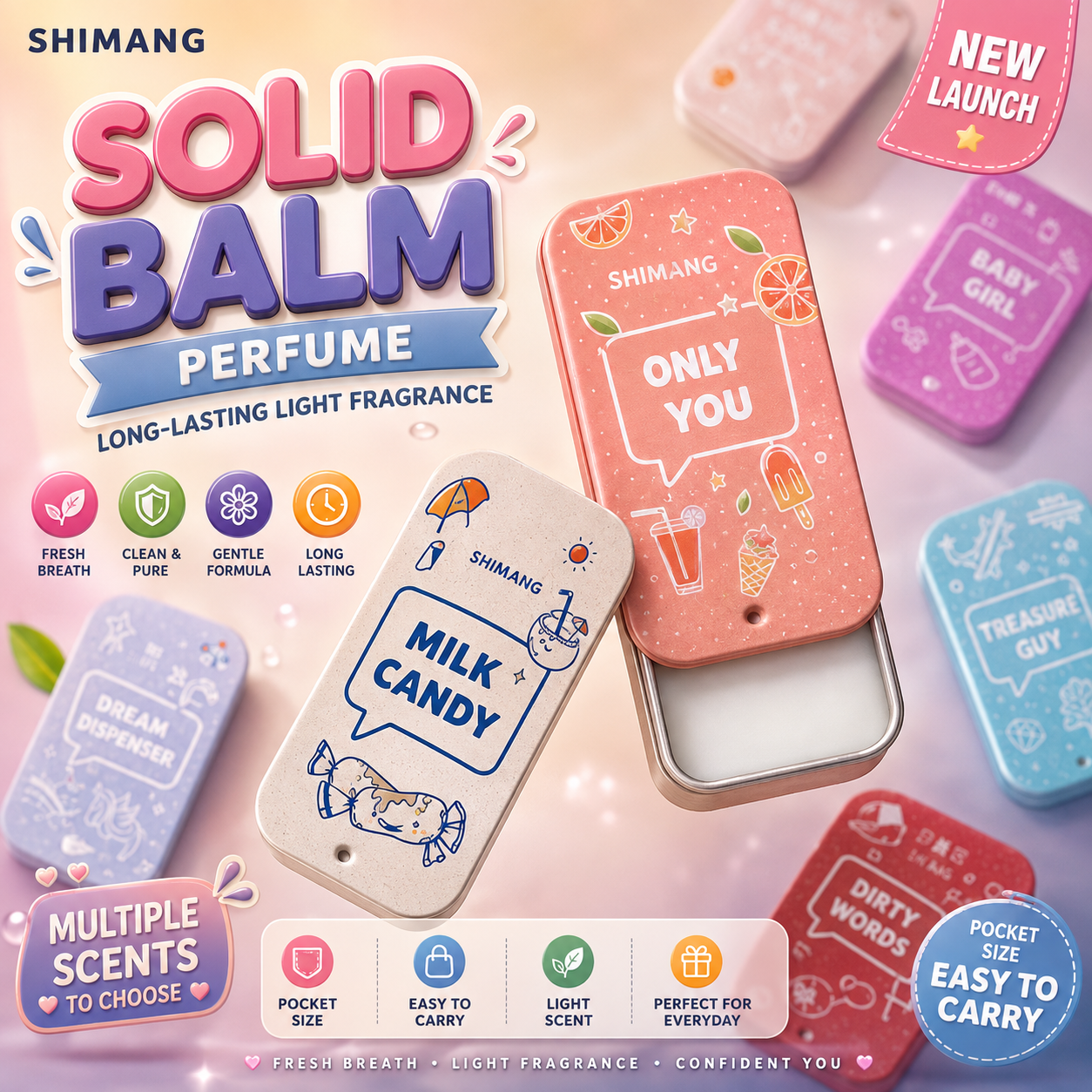
Perfumes are complex mixtures of aromatic essential oils, aroma compounds, fixatives, and solvents (typically alcohol or water) formulated to impart a long-lasting, pleasing fragrance to the human body, clothing, or living spaces. Serving as key personal grooming items and luxury accessories, they play a primary role in personal expression, mood enhancement, and olfactory identity.
Primary Fragrance Families
Floral: Notes dominated by fresh-cut flowers such as rose, jasmine, lily, and tuberose, ranging from light single-flower scents to rich bouquets.
Fresh & Citrus: Light, invigorating compositions featuring bright accords like bergamot, lemon, grapefruit, sea breeze, and green foliage.
Woody & Earthy: Warm, grounded profiles relying on rich base notes like sandalwood, cedarwood, vetiver, and patchouli.
Amber & Oriental: Deep, spicy, and exotic fragrances driven by notes of vanilla, amber, resin, cinnamon, and cardamoms.
Key Product Characteristics
Concentration Levels: Categorized by the ratio of perfume oil to solvent, directly influencing longevity and intensity (e.g., Parfum, Eau de Parfum (EDP), Eau de Toilette (EDT), and Eau de Cologne (EDC)).
Olfactory Pyramid Structure: Formulated to evolve over time through top notes (initial burst), heart/middle notes (the core identity), and base notes (the lingering foundation).
Personalized Interaction: Reacts uniquely with individual body chemistry, skin temperature, and moisture levels, producing a distinct scent trail (sillage) for every wearer.
 Daily Usage
 Cosmetics
 Baby Toys
 Perfumes
 Gift items
 Clothings